

Emotional Intelligence: The secret to Leadership and Life success
Emotional intelligence (EQ) might sound like just another corporate buzzword, but it’s far more than that. While often highlighted as a top skill for successful leadership, EQ reaches beyond the boardroom, shaping how we engage with others and navigate life’s complexities. From managing workplace dynamics to fostering deeper connections with family and friends, EQ underpins our ability to understand and manage emotions effectively.
At its essence, EQ is the bridge between logical thinking and emotional feeling. It empowers us to identify our emotions, recognise patterns, and respond with intention rather than reaction. This skill fosters resilience, empathy, and a sense of purpose, driving both personal and professional growth. Whether you’re making high-stakes decisions or nurturing relationships, EQ is a vital tool for cultivating balance, authenticity, and long-term success in all areas of life.
Developing EQ is not just beneficial—it’s transformational.
What is Emotional Intelligence?
At its core, emotional intelligence is about connecting the head and the heart—the logical mind with emotional understanding. Research shows that people with higher EQ levels tend to be more successful, both personally and professionally. And the best part? EQ isn’t a fixed trait; it’s measurable, learnable, and can transform our relationships, effectiveness, and overall wellbeing.
Think about this: how often do you really pay attention to your emotions? Grab a piece of paper and list all the emotions you can think of. How many did you name? If you’re like most people, you might struggle to get beyond 10 or 15. Yet the English language contains over 3,000 words for emotions! Recognising and naming these emotions is a first step in building your EQ.
The four pillars of Success
Emotional intelligence is the foundation for success across four key dimensions of life:
- Effectiveness – It shapes our ability to achieve results, inspire action, and make thoughtful decisions in personal and professional settings.
- Wellbeing – It supports emotional balance, resilience, and the ability to sustain physical and mental energy.
- Relationships – EQ fosters meaningful connections, empathy, and communication, enabling us to build trust at work and at home.
- Quality of Life – It enhances our ability to experience joy, contentment, and fulfilment in everyday moments.
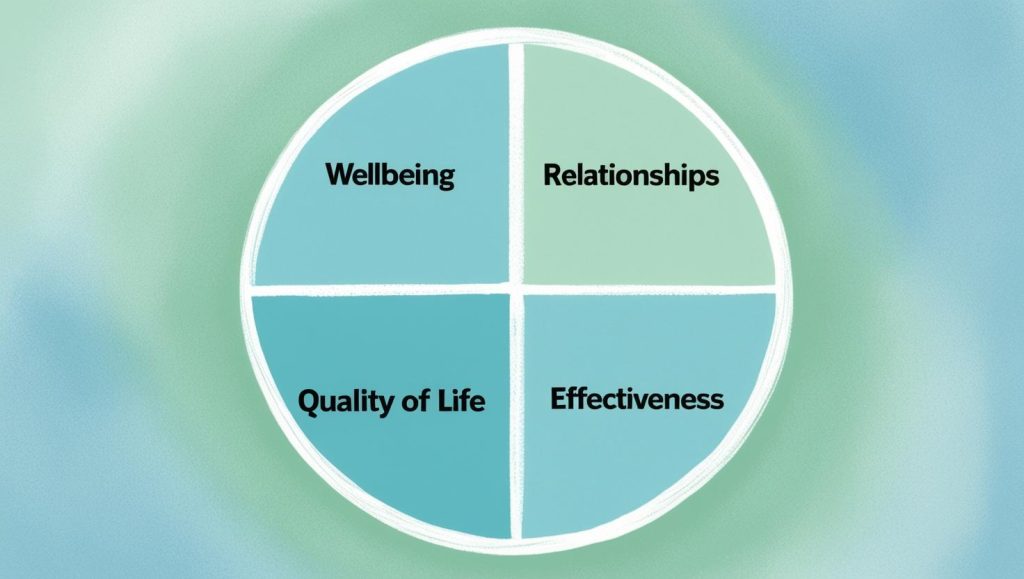
To understand your current standing, try this exercise: Draw a circle divided into four quadrants labelled Wellbeing, Relationships, Quality of Life, and Effectiveness. Rate yourself from 1 to 10 in each area, reflecting on where you are and where you want to be. The gaps represent opportunities for growth through emotional intelligence, offering a roadmap to a more balanced and successful life.
The three focus areas of EQ
Developing emotional intelligence requires focus on three transformative focus areas:
1. Self-Awareness – This is the foundation of EQ. It involves recognising your emotions, identifying your strengths and challenges, and understanding your thought and behavioural patterns. Self-awareness allows you to navigate life with clarity and confidence.
2. Self-Mastery – Once you understand your emotions, you can choose how to respond. This pursuit is about acting with intention, staying aligned with your values, and breaking free from automatic reactions that may not serve you.
3. Purposeful Contribution – This final focus area connects you to your deeper purpose and vision. It’s about aligning your actions with your “why,” fostering a sense of fulfilment, and creating meaningful contributions to your world.
By embracing these focus areas, you can transform not only your personal growth but also your ability to lead, inspire, and connect with others, creating a life of purpose and impact.
Self Awareness

Knowing yourself starts with identifying and understanding your emotions. Emotions carry vital data, helping us navigate life’s challenges. For example:
- Fear signals that something is at risk. What fear are you experiencing, and what is it telling you?
- Anger suggests something is in your way. Reflect on a recent moment of anger—what obstacle triggered it?
If we don’t recognise or label our emotions, we miss these valuable messages. Start paying attention to your patterns. Write down: “When (stimulus), I (reaction).” For instance, “When I feel criticised, I withdraw.” Understanding these patterns can help you break free from autopilot responses.
Getting to know yourself on a deeper level is the cornerstone of emotional intelligence. Start by becoming fluent in the language of emotions. Emotions are not just fleeting feelings—they are messages, each carrying valuable insights about your needs, desires, and experiences.
Name your emotions when they arise. Simply labelling what you’re feeling, such as “I feel frustrated” or “I feel joyful,” can significantly lessen their intensity and help you regain control
Practice observing your emotions without judgment. Instead of labelling feelings as “good” or “bad,” view them as valuable data that provide clues about your inner state and external environment.
Pay attention to how emotions manifest in your body. Physical sensations like tension in your shoulders or a racing heart often accompany feelings, giving you a fuller understanding of what’s happening internally.
Recognize the buildup before a trigger by becoming attuned to subtle signals—like irritability or discomfort—so you can take steps to prevent reactive behaviour.
Journaling your feelings regularly can also deepen self-awareness. Writing allows you to process emotions, spot patterns, and clarify your thoughts.
By adopting these practices, you’ll cultivate a clearer understanding of your emotions and develop the self-awareness needed to navigate life with greater ease and intention.
Self Mastery

Self-mastery means stepping off autopilot and taking control of how you respond to life’s challenges. Instead of reacting impulsively, you pause, reflect, and choose your most constructive course of action. It’s about developing the ability to assess situations and decide how you want to show up, rather than simply responding based on habit or emotion.
When faced with a heated situation, take a moment to breathe deeply, sip water, or count to ten. Most situations rarely demand an immediate reaction. By taking that brief pause, you create space to reflect on your emotions, the potential outcomes, and the best course of action. Consider the emotional and tactical costs and benefits of your options—both short-term and long-term—before making a decision.
Align your actions with your values, not your immediate emotional impulse. This creates a response that is thoughtful, grounded, and authentic.
Navigating emotions is like steering a ship through stormy seas. Emotions aren’t obstacles to control; they’re valuable tools for navigation. When you recognise and validate your feelings, you empower yourself to transform them into actions that align with your goals. By choosing how you respond, you enhance your emotional intelligence and build resilience, creating better outcomes in both personal and professional settings.
Self mastery requires intention and mindfulness. A great way to start is with daily check-ins: take a moment to ask yourself, “What am I feeling right now?” “What options do I have?” and “What do I truly want?” This practice helps you become more aware of your emotional state and clarify your desires, allowing you to make decisions from a place of awareness rather than habit or impulse.
Before reacting in a tense situation, pause and breathe. This simple act gives you space to shift from automatic responses to more conscious actions. Use physical cues, like relaxing your shoulders or taking deep breaths, to calm your emotions and reset your body’s state.
Reframing challenges with optimism can be powerful focusing on solutions rather than problems opens up possibilities. Finally, always weigh the costs and benefits of your decisions, considering both the immediate and long-term impact. By integrating these habits into your daily life, you’ll respond with greater intention, making choices that align with your values and goals.
Purposeful Contribution

The final focus area emphasises your “why.” Purposeful contribution asks you to connect with your purpose and use it to guide your actions. This area involves empathy—not only understanding others’ emotions but also using that insight to strengthen relationships.
Empathy in Action
When someone frustrates you, pause and get curious. What’s really going on? Empathy builds trust and helps you navigate challenging interactions. But empathy is just one part of purposeful contribution. The other is connecting to your noble goal—your life’s purpose.
Your noble goal answers the question: What legacy do I want to leave behind? It provides a compass for daily decisions and aligns your actions with a larger vision.
Crafting Your Noble Goal
Start with a verb: “To inspire…,” “To empower…,” “To create…” Then add a noun. For example, “To inspire compassionate leadership” or “To create meaningful connections.” Refine it until it feels deeply authentic. A strong noble goal is enduring, outward-focused, and inspiring.
Purposeful contribution better starts with clarity around your purpose. Articulate your noble goal—this is the vision that fuels your actions and decisions. When you’re clear on what matters most, it becomes easier to evaluate whether your daily actions align with that long-term vision. Regularly reflect on how your choices today contribute to your greater purpose.
Mastering deep listening is another essential skill. Truly listening to others, without judgement or interruption, fosters a deeper connection and shows respect. This not only enhances relationships but also cultivates empathy, an important component of emotional intelligence.
To further develop empathy, practice loving-kindness meditation. This form of meditation encourages you to extend compassion to yourself and others, which enhances your ability to give from a place of understanding and care. By practicing these tips, you begin to make choices that reflect your true purpose, strengthen your connections with others, and nurture a compassionate and empathetic mindset.
Emotions are the drivers of success
Emotions are not just reactions to events; they are the driving force behind how we think, make decisions, and take action. Whether we realise it or not, our emotional state influences our choices every day. Developing emotional intelligence (EQ) is key to understanding and managing these emotions effectively, allowing us to lead with intention rather than being driven by reactive impulses. By harnessing the power of our emotions, we can navigate life’s challenges with clarity and purpose.
When we have a high level of emotional intelligence, we can better understand our own emotions and those of others, allowing for deeper connections and more meaningful relationships. This emotional awareness enables us to create an environment where collaboration, empathy, and respect thrive. EQ also helps us make more informed decisions, ensuring our actions are aligned with our values and long-term goals, not just our immediate emotional reactions.
Living in alignment with our purpose requires that we are aware of our emotions and use them as tools to guide our actions. So, what’s your noble goal? I’d love to hear about it. Share it with me. Let’s start a conversation about how emotional intelligence can transform the way we lead, live, and connect with the world.
Ready to take the first step toward creating a resilient, emotionally intelligent workforce?
By attending our Emotional Intelligence workshops, you and your team will gain valuable skills to navigate workplace challenges, improve communication, and foster a more harmonious work environment. Contact us today to find out more about our wellness workshops, designed to support emotional well-being and address workplace challenges, helping you navigate conflicts, manage stress, and overcome emotional struggles.
Next Steps:
We offer QCTO qualifications, accredited learnerships, soft skills workshops, short courses, and online training solutions. Reach out to one of our representatives today to find out which training intervention is best suited to your skills gap needs. We can assist you with what the best approach is to improve BBBEE points, tax incentives, and various other benefits for your Skills Development efforts. Reach out by visiting the link here.